

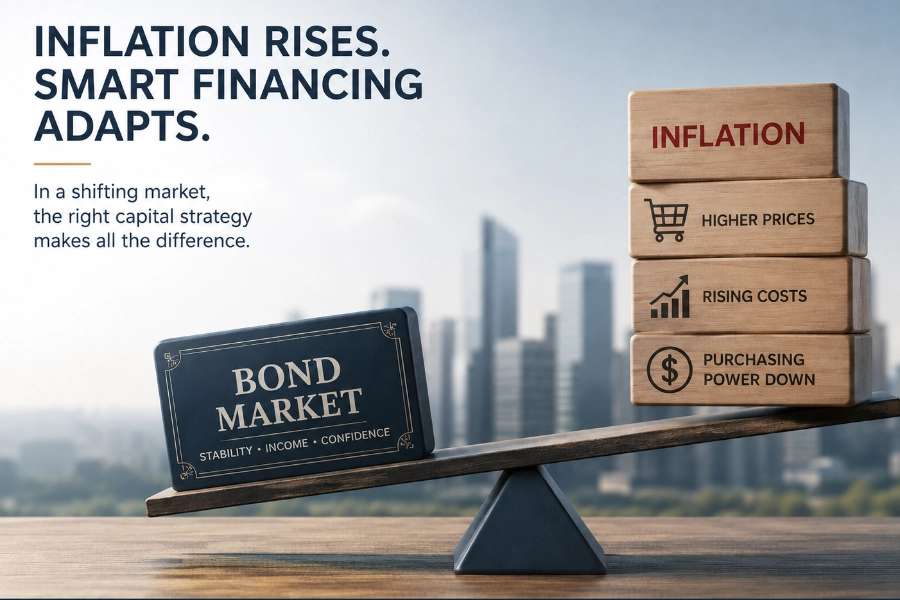
A Market Defined by Uncertainty and Opportunity
The commercial real estate financing market continues to face a challenging and highly dynamic environment in 2026. Investors, lenders, and developers are navigating a combination of elevated interest rates, inflation concerns, geopolitical uncertainty, and ongoing volatility in the bond markets. While transaction activity has started to improve in certain sectors, financing conditions remain significantly tighter than the low-rate environment investors became accustomed to during the previous decade.
For investors looking to acquire commercial real estate, understanding how global events and economic trends influence commercial mortgage rates has become increasingly important. Financing costs, lender appetite, and property valuations are all being shaped by broader economic forces that extend far beyond the real estate industry itself.
The Impact of Middle East Conflict on Financial Markets
One of the biggest factors influencing commercial financing right now is the ongoing conflict in the Middle East. Rising geopolitical tensions involving Iran and concerns surrounding energy supply disruptions have created renewed inflation fears across global markets.
Oil prices have moved higher as investors worry about potential supply interruptions and broader regional instability. Higher energy costs impact nearly every segment of the economy, from transportation and construction to manufacturing and consumer goods. As inflationary pressure increases, financial markets often react quickly.
For commercial real estate investors, these geopolitical events matter because they directly affect interest rates and the bond market. When investors expect inflation to remain elevated, they typically demand higher yields on U.S. Treasury bonds. Since Treasury yields serve as the benchmark for most commercial mortgage pricing, rising bond yields generally translate into higher borrowing costs for commercial real estate loans.
Inflation Continues to Influence Lending Conditions
Although inflation has moderated somewhat compared to peak levels seen in recent years, it remains a major concern for both the Federal Reserve and commercial lenders. Persistent inflation creates uncertainty about future monetary policy and interest rate direction.
Commercial lenders are responding by maintaining conservative underwriting standards. Many banks, credit unions, and debt funds are focusing more heavily on:
Strong Debt Service Coverage Ratios
Lenders want to ensure properties generate sufficient income to comfortably support debt payments, even if operating expenses increase or rents soften.
Borrower Liquidity and Experience
Experienced sponsors with strong balance sheets and liquidity reserves are receiving more favorable loan terms than inexperienced borrowers or highly leveraged investors.
Conservative Property Valuations
Appraisers and lenders are being more cautious with assumptions regarding rent growth, occupancy projections, and exit cap rates.
The result is a lending environment that rewards disciplined investors with strong fundamentals while making it more difficult for speculative or highly leveraged acquisitions to secure financing.
Why Bond Market Volatility Matters to Commercial Real Estate
Many commercial real estate investors focus primarily on property performance and local market conditions. However, the bond market often plays an equally important role in determining financing costs and investment returns.
Commercial mortgage rates are commonly tied to Treasury yields or swap rates. When the bond market experiences volatility, loan pricing can change rapidly — sometimes within days or even hours.
Rising Treasury Yields Increase Borrowing Costs
During periods of inflation concern or economic uncertainty, Treasury yields often rise as investors demand higher returns. This directly impacts commercial mortgage rates across nearly all loan products, including:
- Multifamily agency loans
- Commercial bank loans
- CMBS financing
- Bridge loans
- SBA commercial real estate financing
Even small movements in Treasury yields can significantly impact monthly loan payments, debt service coverage ratios, and overall property cash flow.
Bond Market Swings Can Affect Loan Execution
In today’s market, borrowers may begin underwriting at one interest rate only to find loan pricing materially different by closing. Sudden market swings can affect leverage, proceeds, and debt service calculations.
This volatility has caused many investors to become more cautious when underwriting acquisitions, particularly for deals with narrow margins or heavy renovation costs.
Commercial Property Sectors Facing Different Financing Conditions
Not all commercial property types are being treated equally by lenders in 2026. Financing availability varies significantly depending on asset class, market fundamentals, and perceived risk.
Multifamily Remains a Preferred Asset Class
Multifamily properties continue to receive strong lender interest due to long-term housing shortages and relatively stable occupancy trends. Agency lenders such as Fannie Mae and Freddie Mac remain active participants in the market.
Industrial Properties Continue to Perform Well
Industrial and logistics properties remain attractive in many markets due to ongoing e-commerce demand, supply chain restructuring, and population growth.
Office Properties Face Greater Challenges
Office financing remains one of the most difficult segments of the market. Remote work trends, tenant downsizing, and uncertain long-term demand have caused many lenders to reduce exposure to office properties.
Retail Financing Has Become More Selective
Well-located retail centers with grocery anchors or strong tenant mixes can still secure attractive financing. However, lenders remain cautious on weaker retail assets or properties with significant vacancy exposure.
Opportunities Still Exist for Disciplined Investors
While the current financing environment is more challenging than it was several years ago, many experienced investors recognize that periods of market disruption often create attractive long-term buying opportunities.
As higher borrowing costs pressure property valuations, some sellers are being forced to reduce pricing expectations. This adjustment process is beginning to create acquisition opportunities for investors with strong liquidity, patient capital, and long-term investment strategies.
Commercial real estate has historically served as a hedge against inflation, particularly for assets capable of increasing rents over time and generating stable cash flow.
The Importance of Strategic Financing Guidance
In today’s environment, financing strategy has become just as important as property selection. Investors must carefully evaluate loan structure, fixed versus floating rates, prepayment flexibility, reserve requirements, and long-term exit strategies.
Working with an experienced commercial mortgage brokerage can help investors:
- Identify lenders that remain active in the current market
- Compare financing structures across multiple loan programs
- Navigate changing underwriting requirements
- Manage interest rate risk and market volatility
- Structure loans that align with long-term investment goals
Looking Ahead
The commercial financing market in 2026 remains heavily influenced by inflation, global conflict, interest rates, and bond market volatility. While uncertainty continues to affect the market, disciplined investors who understand these economic relationships may find opportunities that were not available during the ultra-low-rate environment of previous years.
For commercial real estate investors, staying informed and maintaining a flexible financing strategy will be critical in navigating the evolving market landscape ahead.

Mike Reible is a commercial mortgage broker, intermediary, and licensed real estate broker with 25 years of experience. As a seasoned expert, Mike and his team serve investors, developers, and business owners nationwide.
Mr. Reible specializes in structuring financing for multifamily, mixed-use, and income-producing properties. Through GreenFinancing.com, Mike shares insights, market trends, and financing strategies tailored to today’s evolving commercial real estate landscape.
949-614-1300 Office
Mike@GreenFinancing.com